 English
 Arabic
 French
 Spanish
 Portuguese
 Deutsch
 Turkish
 Dutch
Dutch
 Italiano
 Russian
 Romaian
 Portuguese (Brazil)
 Greek
Greek

Forums
Welcome to the Internet frontpage discussion billboard, the best place to discuss topics with other users ranging from marketing, technology, health, beauty, entertainment etc.
What Is Online Trading? Complete 2025 Guide to How It Works, Benefits, Risks, and Strategies

Learn everything about online trading — what it is, how it works, major types of financial markets, benefits, risks, and beginner strategies. A comprehensive 2025 global guide for traders and investors.
Online trading has become one of the defining features of modern finance. From buying company shares to trading global currencies or commodities, the ability to trade online has made financial markets more accessible than ever before.
Whether you’re an individual investor, a day trader, or simply curious about how it all works, this guide breaks down the fundamentals — from the basics to advanced insights — so you can understand and navigate online trading confidently.
What Is Online Trading?
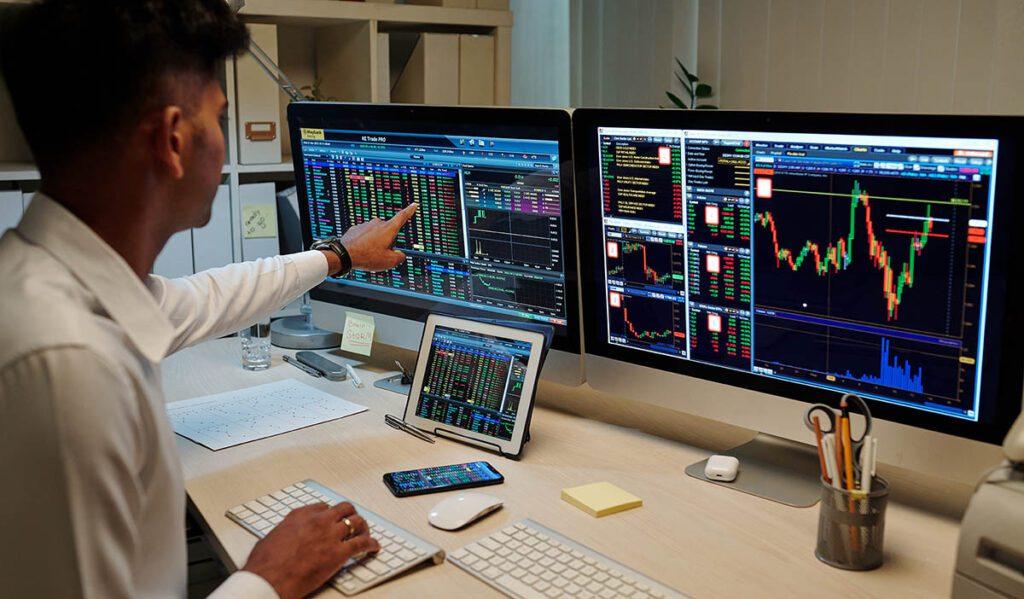
Online trading refers to the process of buying and selling financial instruments — such as stocks, bonds, commodities, currencies, and derivatives — through internet-based platforms.
Instead of calling a broker or visiting a trading floor, individuals can place orders, monitor their investments, and manage portfolios directly from computers or mobile devices.
This digital transformation has democratized finance. Once limited to institutions and professionals, trading is now open to anyone with an internet connection and a verified brokerage account.

How Online Trading Works
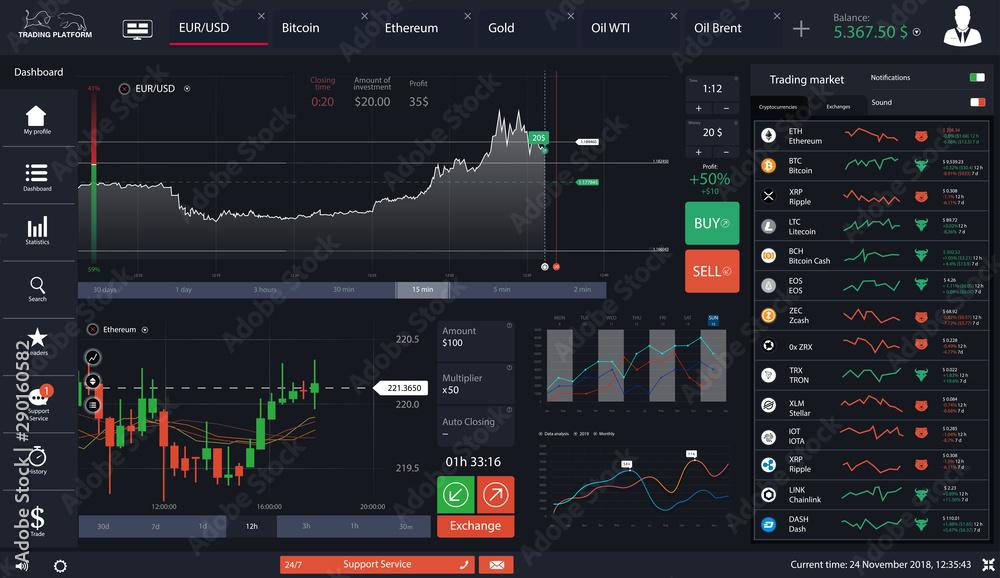
Online trading operates through electronic trading platforms provided by brokers or financial institutions. These platforms connect individual traders to exchanges or liquidity providers.
Here’s how it typically works:
-
Open a Trading Account – Choose a regulated broker, complete identity verification (KYC), and fund your account through bank transfer, card, or digital wallet.
-
Select a Market or Asset – Choose from instruments such as stocks, forex pairs, commodities, indices, or cryptocurrencies.
-
Place an Order – Decide whether to buy (long) or sell (short). Use order types like market orders (executed immediately at current price) or limit orders (executed at your chosen price).
-
Trade Execution – Once your order is placed, the platform routes it electronically to the market for execution.
-
Monitor and Manage – You can watch price charts, set stop-loss or take-profit levels, and adjust your position anytime.

Financial Instruments You Can Trade Online
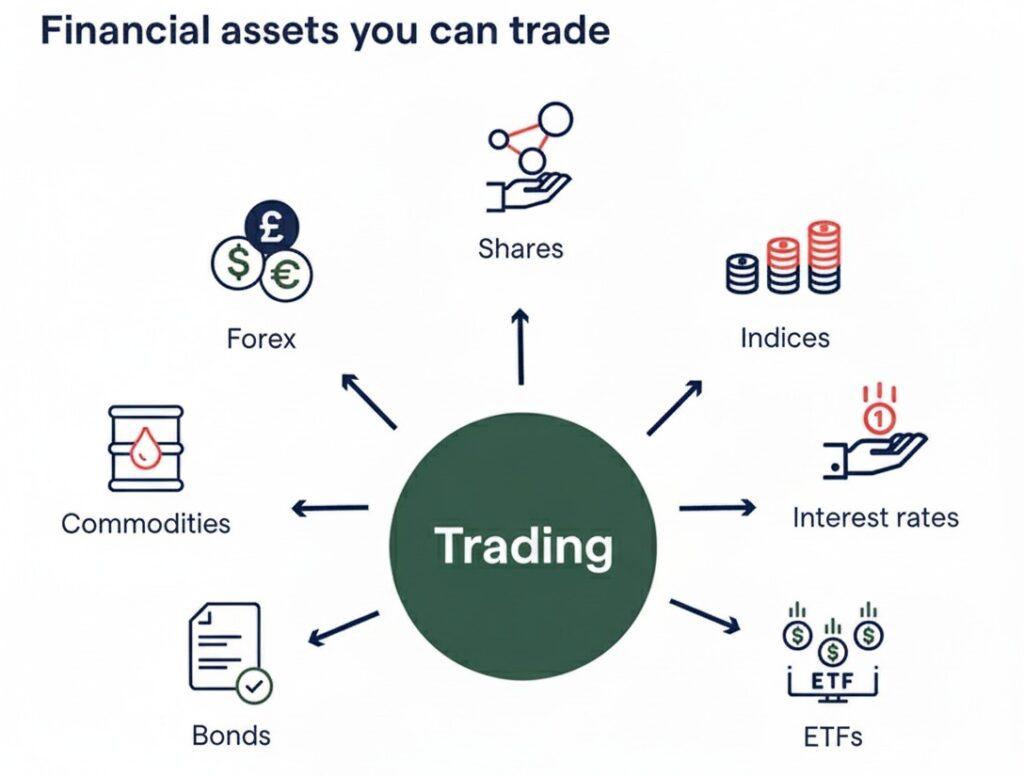
Online trading offers access to a wide range of asset classes. Here are the major categories:
-
Stocks and ETFs – Ownership in companies or baskets of securities.
-
Forex (Foreign Exchange) – Trading currency pairs like EUR/USD or USD/JPY.
-
Commodities – Gold, oil, coffee, or agricultural goods.
-
Indices – Market averages like the S&P 500, FTSE 100, or NASDAQ.
-
Derivatives (CFDs, Options, Futures) – Contracts that derive value from underlying assets.
-
Cryptocurrencies – Digital assets such as Bitcoin and Ethereum (through regulated platforms).
Benefits of Online Trading
Online trading has reshaped how people participate in global markets. Some key benefits include:
-
Accessibility: Anyone with internet access can start trading, regardless of location.
-
Lower Costs: Digital platforms reduce commissions and eliminate the need for middlemen.
-
Speed and Efficiency: Orders execute instantly in most cases, and market data is available in real time.
-
Transparency: You can track live prices, see historical data, and manage trades 24/7.
-
Control and Flexibility: Investors make independent decisions without relying on brokers to act on their behalf.
Understanding the Risks
While the benefits are substantial, online trading involves risks that every trader should understand before committing real capital.
-
Market Volatility: Prices can fluctuate rapidly due to economic data, news events, or investor sentiment.
-
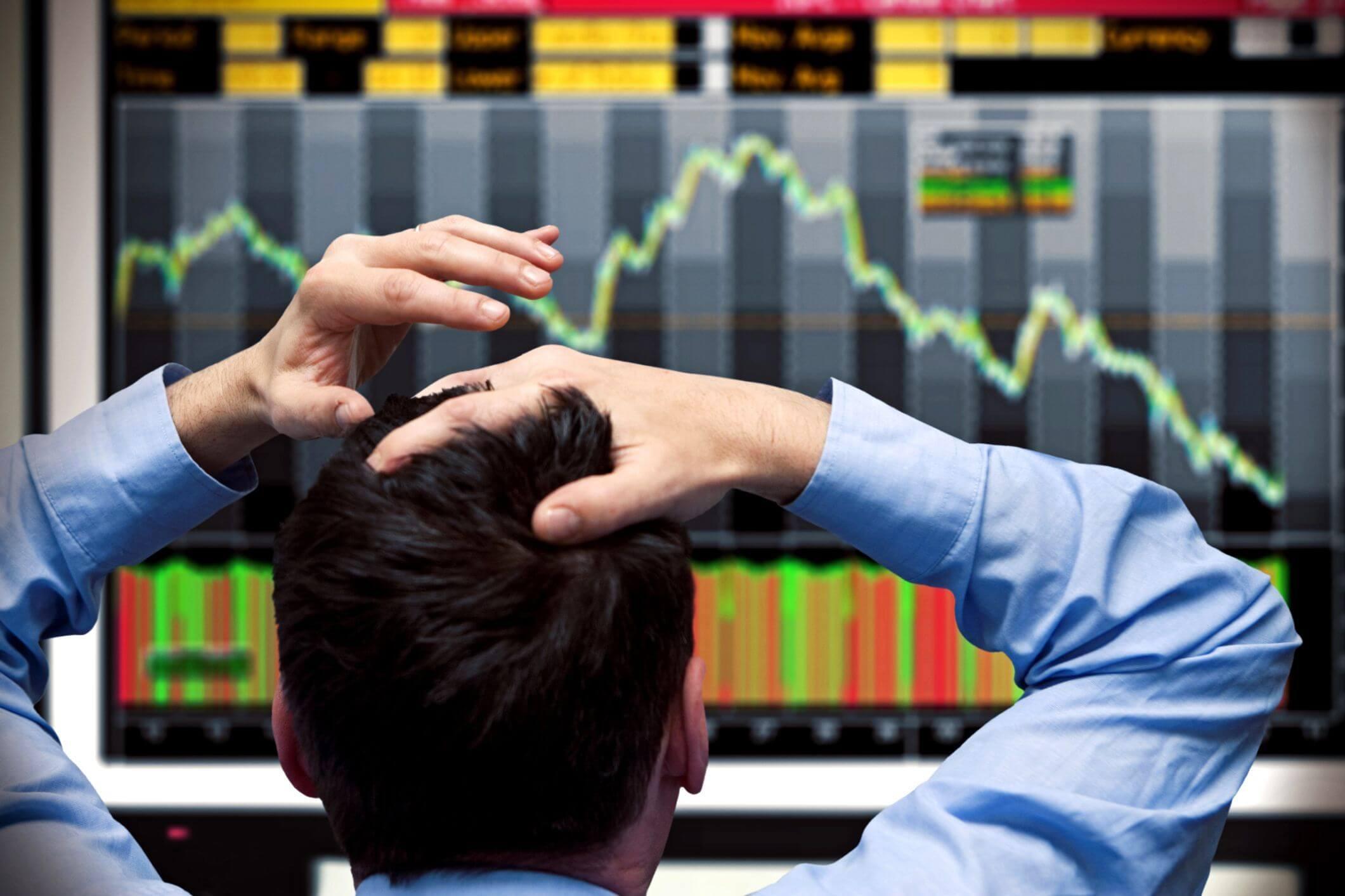
Emotional Bias: Overconfidence, fear, and greed can lead to impulsive trading decisions.
-
Leverage Risk: Margin trading magnifies both gains and losses.
-
Platform and Technical Risks: Connectivity issues or software glitches can affect trade execution.
-
Security Concerns: Phishing scams, fake brokers, and cyber attacks can target online traders.
Always ensure your broker is regulated by a recognized authority (such as the SEC, FCA, ASIC, or CySEC) and use strong passwords, two-factor authentication, and secure networks.
How to Choose a Reliable Online Trading Platform
Your choice of platform determines much of your trading experience. Here’s what to consider:
-
Regulation and Safety: Ensure the broker is licensed by an official regulator.
-
User Interface: Look for simplicity, speed, and mobile compatibility.
-
Fees and Spreads: Compare commissions, spreads, and overnight financing costs.
-
Asset Range: Check which markets are offered — some brokers focus on forex, others on stocks or CFDs.
-
Education and Tools: Quality brokers provide research tools, tutorials, demo accounts, and analysis resources.
Getting Started: Step-by-Step Beginner’s Guide
-
Learn the Basics: Study market fundamentals and how online trading platforms operate.
-
Choose a Broker: Verify regulation, compare fees, and read reviews.
-
Open a Demo Account: Practise with virtual funds to understand how orders work.
-
Develop a Strategy: Decide your goals, risk tolerance, and time horizon.
-
Start Small: Trade with minimal capital while learning from each outcome.
-
Review and Improve: Keep a trading journal to track progress and refine your strategy.

Common Mistakes to Avoid
-
Trading without a plan or risk management strategy
-
Ignoring economic news or key market events
-
Overleveraging and overtrading
-
Chasing losses after bad trades
-
Falling for get-rich-quick schemes
Successful online trading isn’t about luck — it’s about discipline, education, and patience.
Beyond the Basics: Building Skill and Strategy
Once you’ve learned the fundamentals, consider advancing your skills:
-
Technical Analysis: Reading price charts, patterns, and indicators like moving averages or RSI.
-
Fundamental Analysis: Evaluating company financials, economic data, and global trends.
-
Risk Management: Setting stop-loss levels, controlling trade size, and diversifying your portfolio.
-
Trading Psychology: Managing emotions, maintaining consistency, and avoiding bias.
Many professional traders spend years refining their approach. The key is continuous learning and adaptability.
Frequently Asked Questions (FAQ)
1. Is online trading profitable?
Yes, online trading can be profitable, but it’s not guaranteed. Profit depends on knowledge, strategy, risk control, and discipline. Many traders lose money due to emotional decisions or poor planning.
2. How much money do I need to start trading online?
Some brokers allow you to start with as little as $10–$100, but it’s better to begin with an amount you can afford to lose. Always use a demo account first to practise.
3. Is online trading safe?
Online trading is safe if done through a regulated broker. Avoid unlicensed platforms, always verify website security (HTTPS), and enable two-factor authentication.
4. What markets can I trade online?
You can trade stocks, forex, commodities, indices, ETFs, and cryptocurrencies — depending on your broker’s offerings and your local regulations.
5. Can I trade online without experience?
Yes, but you should start with a demo account, study the basics, and practise before trading real money. Beginners should avoid leverage until they understand risk management.
The Future of Online Trading
As technology evolves, online trading will become even more seamless. Artificial intelligence, algorithmic trading, blockchain settlement, and fractional investing are transforming how markets operate.
Accessibility through mobile apps continues to grow — giving more people a chance to participate responsibly.
The future trader will be data-driven, globally connected, and better informed than ever before.

Conclusion
Online trading has revolutionized global finance by making markets more open, efficient, and inclusive. Whether you aim to trade stocks, forex, or commodities, success comes down to knowledge, discipline, and risk control.
Take time to learn, start small, and build a sustainable strategy — that’s how you thrive in this digital age of trading.