

 Science &Technology
 Education & Grants
 Health & Wellness
 Internet business
 Entertainment
 Government & Polities
 Weird & Mysterious
The Ultimate Guide to Physical Fitness: Benefits, Components, Training Plans & How to Stay Consistent

A complete, expert-crafted guide to physical fitness. Learn the science-backed benefits, key components, recommended activity levels, workout plans, beginner steps, motivation strategies, injury prevention tips, and how to build lifelong healthy habits.
📘 THE ULTIMATE GUIDE TO PHYSICAL FITNESS
How to Improve Your Health, Strength & Longevity (Complete 2025 Guide)**

INTRODUCTION
Physical fitness is one of the most important foundations of a long, healthy, fulfilling life. Yet many people struggle to understand what “fitness” really means, how to get started, or how to stay consistent for years.
This ultimate guide brings together the best insights from global health authorities (WHO), CDC, NHS, Mayo Clinic, and more), plus practical real-world strategies, safe training principles, and step-by-step routines to help you make physical fitness an enjoyable part of your everyday life.
Whether you’re a complete beginner, someone starting again after a long break, or already active but looking to improve, this guide gives you everything you need — clearly explained, deeply detailed, and easy to follow.
TABLE OF CONTENTS
-
What Is Physical Fitness?
-
Why Physical Fitness Matters (Science-Backed Benefits)
-
The Five Key Components of Fitness
-
How Much Exercise Do You Really Need? (WHO, CDC, NHS Guidelines)
-
Types of Exercises & How They Improve Your Body
-
How to Start Exercising Safely (Beginner Roadmap)
-
How to Build a Balanced Fitness Routine (Weekly Plans Included)
-
How to Improve Your Fitness Over Time (Progression Guide)
-
How to Stay Consistent Long-Term
-
Common Mistakes to Avoid
-
How to Prevent Injuries & Stay Healthy
-
Nutrition Basics for Better Fitness
-
Mental Health, Stress & Fitness
-
How to Track Your Progress Properly
-
Frequently Asked Questions
-
Final Thoughts (Your Fitness Journey Starts Now)
1. WHAT IS PHYSICAL FITNESS?
Physical fitness is the ability of your body to perform daily tasks — work, chores, movement, and recreational activities — with energy, strength, and endurance, while remaining resilient and reducing your risk of disease.
True fitness is not only about muscles or appearance. It includes:
-
how efficiently your heart and lungs work
-
how strong your muscles are
-
how well your joints move
-
how much energy you have
-
how fast you recover
-
how well your body handles stress
-
how resistant you are to illness
In simple terms:
Physical fitness is your body working at its best, both inside and outside.
2. WHY PHYSICAL FITNESS MATTERS
(Science-Backed Benefits)**

Regular physical activity is one of the most powerful health tools available. It influences nearly every system in your body — from your heart to your brain to your immune system.
2.1 Physical Health Benefits
✔ Strengthens the heart and improves circulation
✔ Lowers the risk of heart disease, stroke, hypertension
✔ Improves lung capacity
✔ Increases metabolism and helps maintain healthy weight
✔ Balances blood sugar and reduces type 2 diabetes risk
✔ Strengthens bones and reduces osteoporosis
✔ Enhances immunity
✔ Improves joint stability and reduces arthritis pain
✔ Boosts energy and reduces fatigue
2.2 Mental & Emotional Benefits
✔ Reduces stress, anxiety, and depression
✔ Enhances cognitive function and memory
✔ Improves sleep quality
✔ Boosts self-esteem and confidence
✔ Supports emotional resilience
2.3 Longevity Benefits
✔ Reduces mortality risk
✔ Improves functional ability as you age
✔ Keeps you independent longer
✔ Reduces the risk of chronic diseases
Fitness is one of the only lifestyle factors proven to extend lifespan and improve the quality of those years.
3. THE FIVE KEY COMPONENTS OF FITNESS
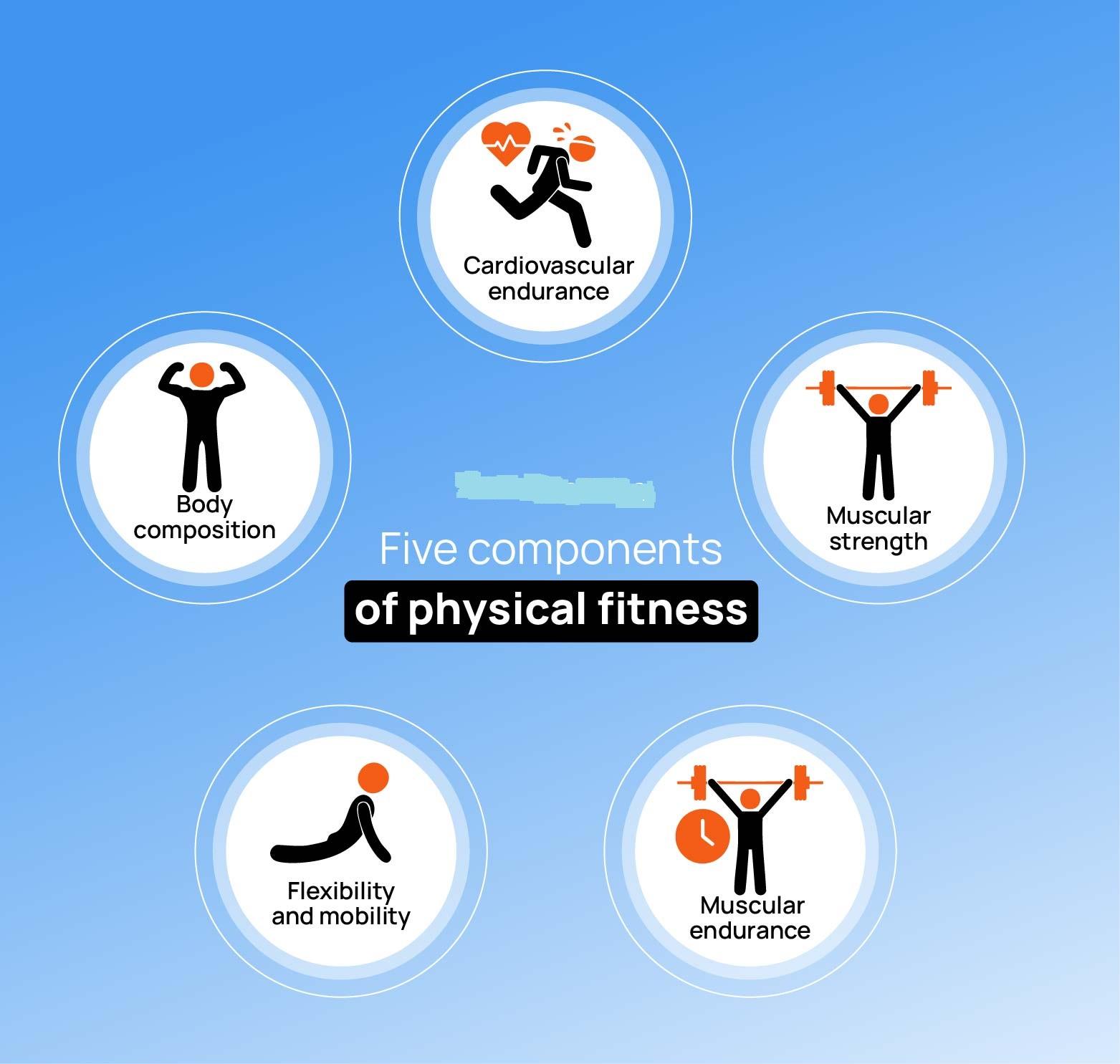
3.1 Cardiorespiratory Endurance
Your heart and lungs’ ability to supply oxygen during activity.
Improved through: walking, jogging, cycling, swimming, dancing.
3.2 Muscular Strength
How much force your muscles can produce.
Improved through: weight lifting, resistance bands, bodyweight training.
3.3 Muscular Endurance
How long your muscles can work without fatigue.
Improved through: circuits, high reps, long-duration bodyweight exercises.
3.4 Flexibility & Mobility
How well your joints move through full range of motion.
Improved through: stretching, yoga, mobility drills.
3.5 Body Composition
The ratio of fat, muscle, bone, and water.
Improved through: strength training, cardio, balanced nutrition.
A complete fitness routine includes all of these components.
4. HOW MUCH EXERCISE DO YOU REALLY NEED?
(WHO / CDC / NHS Guidelines)**
Adults (18–64 years) should aim for:
Either:
-
150–300 minutes of moderate exercise weekly
OR -
75–150 minutes of vigorous exercise weekly
Plus:
-
Muscle-strengthening exercises twice per week
-
Balance/flexibility exercises at least 2–3 times weekly
Examples of moderate activities:
-
brisk walking
-
dancing
-
cycling on flat surfaces
Examples of vigorous activities:
-
running
-
fast cycling
-
jump rope
If you’re a beginner, even 10 minutes per day is a great starting point.
5. TYPES OF EXERCISES & HOW THEY HELP YOUR BODY

5.1 Aerobic/Cardio Exercise
Improves: heart health, endurance, energy levels, metabolism
Examples: walking, jogging, cycling, swimming
5.2 Strength Training
Improves: muscle growth, bone health, weight control, metabolism
Examples: weights, resistance bands, bodyweight training
5.3 Flexibility Training
Improves: mobility, posture, muscle recovery
Examples: stretching, yoga
5.4 Balance & Stability Training
Improves: posture, injury prevention, aging independence
Examples: tai chi, balance drills
A balanced fitness plan includes all four.
6. HOW TO START EXERCISING SAFELY (BEGINNER ROADMAP)
Starting small is the most sustainable approach.
Step 1 — Get clearance if needed
If you have chronic disease, recent surgery, or long-term inactivity, speak with a healthcare provider.
Step 2 — Start with the easiest possible version
Walk for 10 minutes.
Stretch for 5 minutes.
Do bodyweight basics.
Step 3 — Build consistency before intensity
Consistency builds habit.
Habit builds results.
Step 4 — Increase gradually
+5%–10% duration or difficulty per week.
Step 5 — Listen to your body
Mild soreness is normal.
Sharp pain is not.
7. HOW TO BUILD A BALANCED FITNESS ROUTINE (WEEKLY PLANS)

BEGINNER WEEKLY PLAN (No Equipment)
Monday: 20–30 min brisk walk
Tuesday: Bodyweight strength (squats, push-ups, planks)
Wednesday: Rest or light stretching
Thursday: 20 min cycling or walking
Friday: Strength training (beginner level)
Saturday: Yoga, stretching, mobility
Sunday: Rest
INTERMEDIATE WEEKLY PLAN
Monday: 30–45 min moderate cardio
Tuesday: Upper-body strength
Wednesday: Lower-body strength
Thursday: Interval training
Friday: Flexibility + mobility
Saturday: Sports or recreational activity
Sunday: Rest
ADVANCED WEEKLY PLAN
Monday: Intense cardio (running, intervals)
Tuesday: Heavy strength – upper body
Wednesday: Heavy strength – lower body
Thursday: HIIT
Friday: Long-distance moderate cardio
Saturday: Functional training or sport
Sunday: Rest or active recovery
8. HOW TO IMPROVE YOUR FITNESS OVER TIME (PROGRESSION GUIDE)
Progress slowly but steadily.
Ways to progress:
✔ Increase weight
✔ Increase reps
✔ Increase sets
✔ Increase time
✔ Reduce rest time
✔ Add new exercises
✔ Increase workout days
Track what you do weekly and adjust gradually.
9. HOW TO STAY CONSISTENT LONG-TERM

Consistency is more important than intensity.
Top strategies:
-
Choose activities you enjoy
-
Schedule workouts like appointments
-
Start small to avoid burnout
-
Track progress visually
-
Reward yourself
-
Mix different workout styles
-
Have a backup plan for busy days
-
Join a community or workout partner
Most importantly:
Make exercise part of your lifestyle, not a temporary project.
10. COMMON MISTAKES TO AVOID
❌ Doing too much too soon
❌ No warm-up or cooldown
❌ Training randomly with no structure
❌ Ignoring nutrition
❌ Comparing yourself to others
❌ Focusing only on cardio or only strength
❌ Not resting enough
Avoid these and your progress will be much smoother.
11. INJURY PREVENTION & RECOVERY
-
Always warm up (5–10 minutes)
-
Stretch after workouts
-
Increase intensity gradually
-
Use proper exercise form
-
Prioritize sleep
-
Take rest days seriously
-
Treat pain early
If pain lasts more than 72 hours, rest or seek medical advice.
12. NUTRITION BASICS FOR BETTER FITNESS

Fitness and nutrition always work together.
What to focus on:
✔ Lean proteins (muscle repair)
✔ Healthy carbs (energy)
✔ Healthy fats (hormone balance)
✔ Fruits & vegetables (micronutrients)
✔ Adequate hydration
✔ Portion control
Avoid extreme diets. Aim for balance.
13. FITNESS & MENTAL HEALTH
Exercise is one of the best natural antidepressants, anxiolytics, and stress relievers.
Benefits include:
-
Increased serotonin
-
Better sleep
-
Reduced stress hormones
-
Better emotional resilience
Even 10 minutes a day can make a noticeable difference.
14. HOW TO TRACK YOUR PROGRESS PROPERLY
Track using:
-
Steps
-
Workout duration
-
Weight lifted
-
Measurements (waist, hips, chest)
-
Body fat percentage (optional)
-
Photos every 2–4 weeks
What matters most is long-term improvement, not daily changes.
15. FREQUENTLY ASKED QUESTIONS
Q: Can I get fit without going to the gym?
Absolutely. Walking, home workouts, bodyweight training, yoga, and outdoor activities all count.
Q: How long until I see results?
Most people feel improvements within 2 weeks, see visible changes in 4–8 weeks, and major changes in 3–6 months.
Q: Are short workouts effective?
Yes — even 10–15 minutes daily produces significant health benefits.
Q: What is the best time to exercise?
The time you can stick to consistently.
16. FINAL THOUGHTS — YOUR FITNESS JOURNEY STARTS NOW

Physical fitness isn’t a race, a competition, or a short-term challenge.
It’s a lifelong investment in your health, happiness, and longevity.
Start small.
Stay consistent.
Enjoy the process.
With every step, every walk, every stretch, and every workout, you’re building a stronger, healthier, more resilient version of yourself.
You now have the complete roadmap — the rest is up to you. 🚀💪

 Arabic
 French
 Spanish
 Portuguese
 Deutsch
 Turkish
 Dutch
Dutch
 Italiano
 Russian
 Romaian
 Portuguese (Brazil)
 Greek
Greek