


 Science &Technology
 Education & Grants
 Health & Wellness
 Internet business
 Entertainment
 Government & Polities
 Weird & Mysterious
Cardi B won't face second assault trial: as Judge Denies Retrial in Emani Ellis Civil Suit
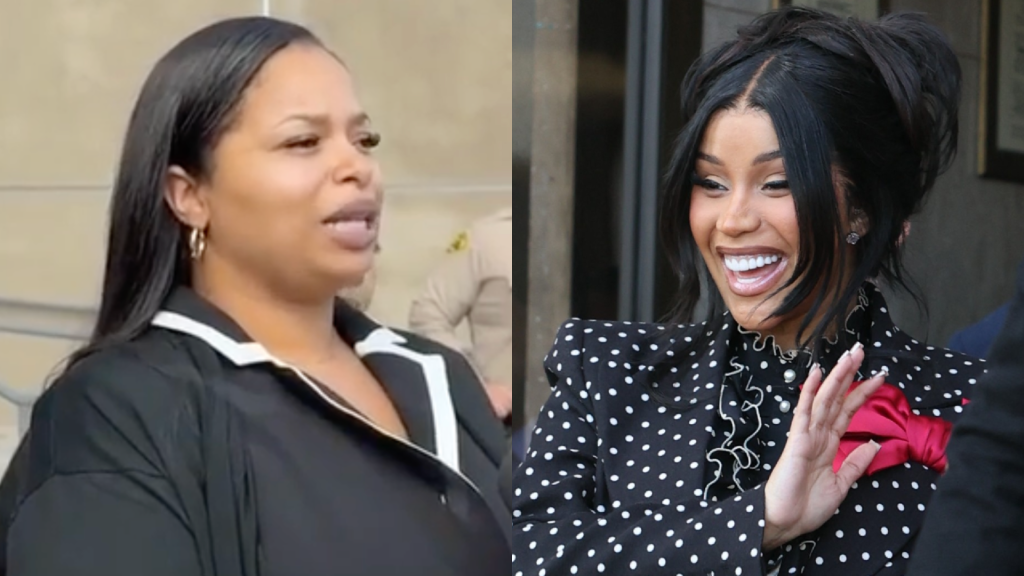
A Los Angeles judge formally ended the long-running civil assault case against Cardi B by denying a security guard's motion for a new trial. Explore the unique legal reasoning, the judge's pointed critique of the plaintiff's counsel, and the finality of the verdict.
Cardi B won't face second assault trial, Cardi B Triumphs as Judge Denies Retrial in Emani Ellis Civil Suit: Legal Rationale and Finality.
Cardi B Triumphs as Judge Denies Final Bid for Retrial, Formally Ending the Five-Year Civil Assault Suit
After years of legal battles, allegations of assault, and high-profile courtroom drama, the civil lawsuit filed against rapper Cardi B (Belcalis Almánzar) by former security guard Emani Ellis has reached its definitive conclusion.
A Los Angeles judge has formally denied the plaintiff’s motion for a new trial, solidifying the initial verdict that cleared the "WAP" artist of any wrongdoing.

Introduction: The Final Chapter of a Tumultuous Legal Saga
While many news outlets reported the outcome—that Cardi B secured another legal victory—the true depth of this final ruling lies in the rationale behind the judge’s decision.
This was more than just a procedural denial; it was a firm rejection of the plaintiff’s arguments, complete with a pointed legal analysis and a strong suggestion of professional misconduct by the opposing counsel.
This Novasvet article delves into the specific claims made for the retrial, the court's unique rebuttal, and what the ruling means for the finality of this high-stakes celebrity case.
1: The Ruling That Confirms Finality
The civil suit stems from an alleged 2018 incident in a medical building, which led Emani Ellis to sue Cardi B for assault, battery, intentional infliction of emotional distress, negligence, and false imprisonment.
Following a lengthy trial, the jury cleared Cardi B of all allegations in September 2024.
The recent filing was a final attempt by Ellis’s legal team to reverse that decision by requesting a new trial (retrial).
This motion is a standard legal maneuver, but it requires the moving party to demonstrate that errors, misconduct, or external factors unfairly prejudiced the outcome of the original proceedings.
On Friday, December 6, 2025, Los Angeles County Judge Ian Fusselman delivered the final verdict: Motion DENIED.
This ruling not only secured a final victory for Cardi B but also confirmed that the initial jury’s finding—that the rapper was not liable for the alleged incident—would stand.

2: Deep Dive into the Retrial Arguments and Legal Gaps
Ellis’s attorneys presented two primary arguments intended to demonstrate jury prejudice and defense misconduct, demanding the prior verdict be reversed.
Claim 1: The Pen Incident and Juror Intimidation
The most sensational argument was the claim that the jury was "intimidated" by an incident that occurred outside the courthouse just moments before the September verdict was announced.
During a confrontation with YouTuber Donat Ricketts, who questioned her about a suspected pregnancy, Cardi B was filmed throwing a pen onto the pavement. While the rapper maintained the pen hit no one, Ricketts submitted a sworn statement alleging it bounced off the ground and struck him.
Ellis's attorneys argued that witnessing this public display of aggression by Cardi B could have unduly influenced the jury, prejudicing them against the plaintiff.
Claim 2: Concealment of Key Witnesses
The second central argument alleged that Cardi B’s defense team intentionally concealed the identities of two key witnesses: obstetrician Dr. David Finke and receptionist Tierra Malcolm.
The plaintiff's counsel claimed that Cardi B feigned ignorance of the doctor's name early in the lawsuit and that the defense delayed disclosure, hindering their ability to build their case.

3: Judge Fusselman’s Critical Legal Analysis: Why the Claims Failed
The unique and authoritative content in this ruling comes from Judge Fusselman’s detailed, line-by-line rejection of the plaintiff’s claims, demonstrating a sharp grasp of procedural fairness and legal strategy.
The Rebuttal of Intimidation
Judge Fusselman rejected the intimidation claim as pure speculation, noting that the plaintiff's attorney actually requested an instruction that the jury be informed of the incident. In a pointed observation that dismantled the plaintiff’s own strategy, the judge stated:
"Wouldn't that tend to help your case, rather than hurt it? Isn't that why you wanted the jury to find out about it? They were free to ask any questions or make any comments, and they didn't. I don't find anything outside the courtroom had any impact on the jury's deliberations."
The judge essentially reasoned that if the defense believed the pen incident demonstrated Cardi B's aggressive nature, it should have logically bolstered their own case, not intimidated the jury into ruling against them.
Since the jury was aware and offered no comment, the claim of external prejudice was dismissed.
The Rebuttal of Witness Concealment
The judge also dismissed the claims of defense misconduct regarding witness disclosure. He noted that the court had granted both parties permission to append witness names to their roster beyond the original deadline.
This demonstrated that no unequal or unfair advantage was given to the defense, affirming that the legal process was fair and balanced.
4: A Striking Twist: Sanctions Against Plaintiff's Counsel
Perhaps the most significant and unique detail of the judge’s final order was his intent to penalize the attorney for the security guard.
Judge Fusselman observed that the plaintiff’s attorney had continuously informed jurors that his client had received treatment from a psychologist, despite the fact that this doctor had been formally excluded as a witness and no evidence was presented to confirm they had ever met.
The judge found this conduct to be a deliberate effort to mislead the jury, declaring: "I have trouble believing it was an innocent mistake when you did it over and over again."
As a result, the judge indicated he would issue a directive requiring the plaintiff’s attorney to cover the legal fees incurred by Cardi B’s defense team for their motion seeking a finding of contempt against him.
This action is a powerful judicial statement, signaling that the court found the behavior of the plaintiff's legal team unprofessional and potentially unethical.

Conclusion: Finality Achieved
The denial of the motion for a new trial brings the complex and protracted civil suit to a definitive close. Cardi B, who has consistently rejected the accusations of assault and battery, is fully cleared of legal liability.
The ruling by Judge Fusselman is a crucial reminder of the strict legal standards required to overturn a jury verdict. By focusing on the speculative nature of the intimidation claims and the procedural fairness of the witness exchanges, the court ensured that the initial verdict—clearing Cardi B—will stand.
More importantly, the intent to sanction the plaintiff’s attorney sends a clear message about the severe consequences of attempting to introduce unauthorized or misleading evidence into court proceedings.
For Cardi B, this final ruling represents the conclusive end of a challenging five-year legal chapter.

 Arabic
 French
 Spanish
 Portuguese
 Deutsch
 Turkish
 Dutch
Dutch
 Italiano
 Russian
 Romaian
 Portuguese (Brazil)
 Greek
Greek